🎉 The exact growth hacks I used to grow a series of Facebook groups to a 6-digit member count (without paying for ads!)
❓ The problem with the News Feed?
Facebook’s News Feed has become ‘pay-to-play’. Unless you are willing to fork out cold hard cash, it’s really hard to grow your business/community/page organically.
Think of the News Feed as a competition, with every other post trying to insert their content on top of yours on a user’s News Feed. It’s cluttered and congested, and in reality, Facebook favours those who 1) pay to promote their post or 2) have large amounts of engagement on content (all the big pages with audiences already have this advantage).
👞 Before we begin, put yourself in the shoes of a Facebook Product Manager
Facebook iterates and improves their products to optimise towards a few key metrics:
- Increasing time spent of Facebook +
- Increasing engagement with content on Facebook
= More ads viewed, consumed & engaged with.
(These are my assumptions — I’m sure in reality these metrics are a lot more sophisticated.)
The Facebook News Feed hits the 1st metric, where users will spend lots of time scrolling down the infinite feed without realising how much time they spend. Except, it doesn’t increase the 2nd metric, because users mindlessly scroll without engaging in all the content provided.
In 2015, Facebook was starting to popularise Groups — open forums that any user could create. Online communities and forums have always been popular on the internet, just take a look at the presence of existing forums running on vBulletin, MyBB, phpBB, etc. Humans are social creatures and love sharing. As the Facebook paradigm shift grew globally, more and more people were connecting and using Facebook as their source of an online community.
At the same time, Facebook’s News Feed was limiting the reach of pages that weren’t paying for ads or had large amounts of engagement (I had a few pages with 5–10k likes and noticed the huge drop off in organic reach).
What if it was possible to use Facebook Groups to rank on their engagement metric?
Groups would maintain engagement as new content would be created by other users. Facebook would thus prioritise posts from Groups on each users’ News Feed as it satisfied both their key metrics.
💣Here’s my Facebook Groups explosive group blueprint
These are exact strategies I used time and time again to organically grow big Facebook groups.
1. Optimise your Group to be discovered
Before you can begin growing your group, you need to make sure its foundations are set in stone.
Centre your group around a topic that incites discussion. Don’t make it commercial or your business name — make it an authentic chamber where members can have discussion (the commercial aspect can come later once you’ve gotten some critical mass within your group — more about this later).
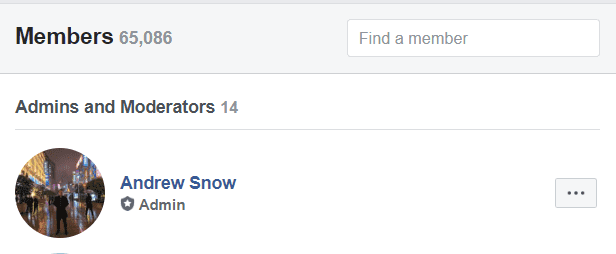
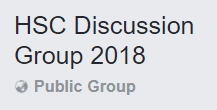
Throughout this article, I’ll be using a group that my good friends and I created as a case-study. The topic we focused on was the Higher School Certificate (Australia’s largest high school exam that dictates tertiary education admission). We called our group, the “HSC Discussion Group”, where students could rant, learn and socialise in a central online community. Before this group was formed, online student communities were fragmented across various forums and local groups. Using Facebook Groups, we saw an opportunity for all student discussion to occur in this one-stop shop.
Your group should encourage discussion. It should revolve around a topic that allows your members to ask questions, but also answer other member’s questions with ease. Don’t focus on an extremely specific niche — else you might miss out on the virality effects of Facebook groups. At its crux, you want your group to be a self-producing content machine. Let your chosen topic of discussion do all the ‘brand marketing’.
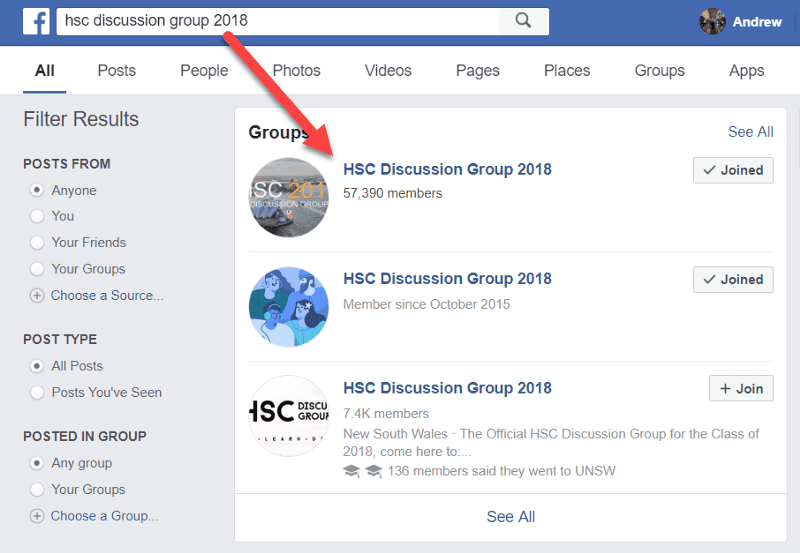
Once you’ve picked a title and topic, you want to create a high quality cover photo (Canva provides good cover photo templates), add a short description and make it presentable. To micro-optimise your group’s discoverability, make sure to set your Group’s unique URL to match your group’s title. Facebook always wants to show the most relevant results to its searches. By setting your URL, you’re telling Facebook that your group is the most relevant result when someone searches your group’s name.
For our HSC Discussion Group, we would make our URL super specific including the year (as the high school exam was contextually different each year), to capture a newer audience each time from search.

2. Do whatever it takes to get that initial critical mass.
One of the hardest parts about launching an online community is getting started. Invite all the friends you have on Facebook to the group. Those who aren’t interested will leave, but those who are interested in your group will help kickstart the discussion.
Engage with community, especially in the beginning - create polls and incite questions. Tell your close friends to do the same. Try average 1 new post a day with multiple comments - the more people engage, the more often Facebook will prioritise your group’s posts on other members News Feeds.
3. Guerrilla Marketing Techniques
This section is completely optional, but an extension of step 2 is to use guerrilla techniques to kickstart group growth. I’ll keep this section short and leave it to your imagination and research to find some other techniques.
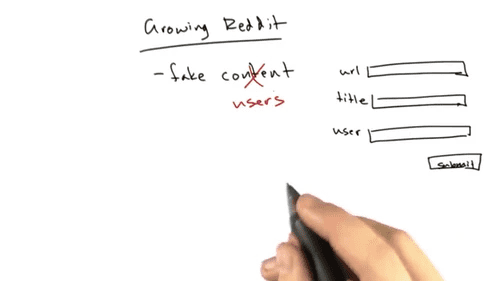
One of the easiest guerrilla marketing techniques you can use is to create multiple Facebook accounts to kickstart conversation in the group. In fact, this was the same method that Reddit used in its early days, creating hundreds of fake accounts to make the platform look more popular.
Another guerrilla technique you can use is by finding similar groups already existing to start gradually bringing members across. Find similar groups, offer to buy them, or even more simply, add their top contributing members and invite them to your group. You want to absorb all the potential users on Facebook who would be interested in your group - and to have them in your group. There are tools that can automate this process - but as a word of caution, most of these tools would break the Facebook Terms of Service, so I would not recommend using them unless you know what you are doing.
4. Reward members - build a team!
A group is nothing without its top contributors. So when you identify top posting members, reward them! The easiest way to reward them is to give them more responsibility in the community. In the HSC Discussion Groups, we often rewarded our top contributors by promoting them to moderators. This gave them a sense of responsibility and authority, because Facebook would display “Moderator” title next to their names. Use any means necessary to reward your top members, from giveaways to prizes and more - it’s totally up to you! Remember, communities are built by people, not one ruler!
5. Maintaining hygiene and control
Setup a set of rules that people must agree to before joining the group. You want to make sure that your members understand they should not post content that violates Facebook’s Terms of Service.
Facebook Groups are top targets for spam and unrelated posts. As your group grows, you will notice automated spammers joining the group, or just malicious users. They will post unrelated content, or flat out spam - you should inform your moderation team to remove and ban these users as soon as possible.
But why?
When spammers join your group and post unrelated content, your community is less likely to engage with this content. The less likely your community engages with the group’s content, Facebook will give less and less weighting to your group’s future posts on people’s News Feeds.
Quite simply:
More engagement = heavier post weighting = seen more on News Feeds.
So make sure to delete the spam as soon as possible to keep your group’s engagement high.
6. Spread your wings and create more groups!
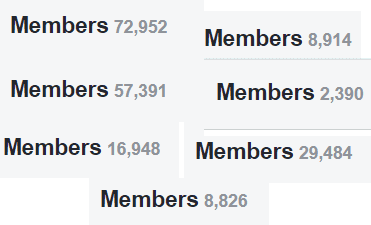
Once you have built one group that’s taken off, you can start building more groups across different industries and sectors. Since you have a userbase, you can find common interests and expand. In the HSC Discussion Group, a common topic was which university to study at after completing high school. As a result, we went from 1 group to over 10 just by creating new groups for each university.
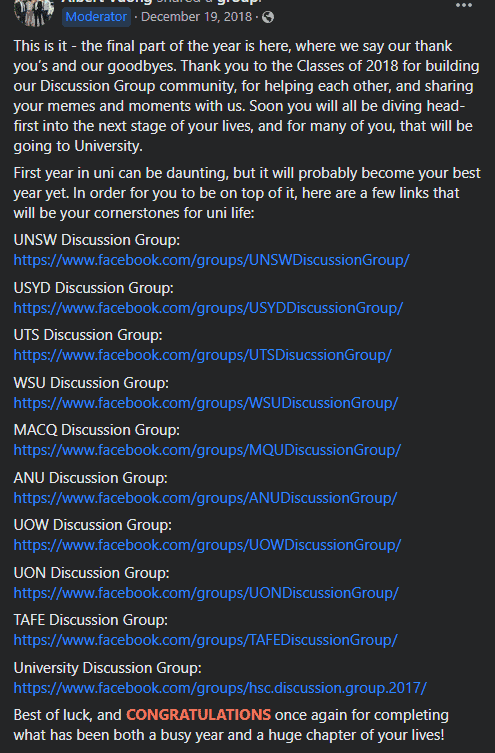
Each university group then took on a life of it’s own and begun growing with a new user base. With this existing user base, kickstarting new groups becomes stress-free.
💰 How do I use Facebook Groups to make money?
Unfortunately there is no golden money making method, but once you have an audience, it becomes a lot easier!
You can sell sponsored posts, create a product or course, share referral/affiliate marketing links, or just keep the group as a non-profit.
Just remember not to make commercialisation the core point of the group, because Facebook is very good at detecting these types of posts and making them less engaging.
If you want to push a product, it’s better to create a post and engage the audience, and then reach out through Messenger or some other channel to promote the product. This way, your group maintains high engagement and you can expand communications beyond just the Facebook Group.
🔚 Conclusion
Now that you know how to create and grow your own Facebook Group - go out there and do it. Nothing’s stopping you from building an online community - just be personable and engaging and you’ll be fine. The opportunities will flow in after.